
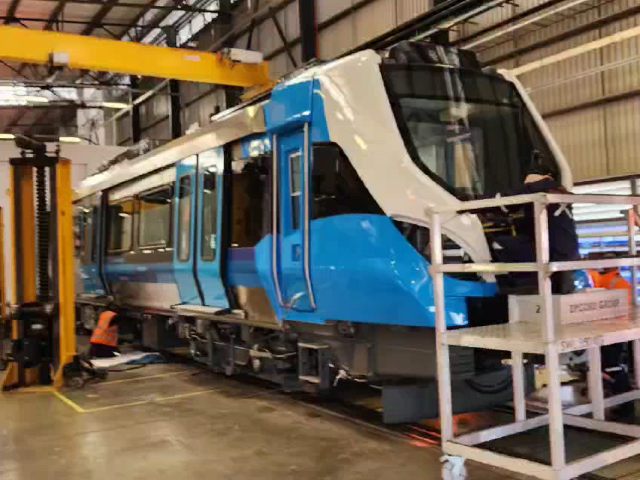
The bogie carries the load, guides the vehicle along the track and, on a locomotive, transmits traction and braking forces. It works in a harsh environment of vibration, shock loads, dust, water and heat, and its parts wear accordingly. Planning bogie and undercarriage spares well is one of the most effective ways to keep locomotives, wagons and coaches available.
This article covers the main wear parts, the factors that drive wear, and how to plan and source replacements.
The main parts of a bogie
Designs vary widely between locomotives, freight wagons and passenger coaches, but most bogies share common elements:
- Frame. A fabricated or cast structure that carries everything else.
- Wheelsets. Axles with wheels, plus axle bearings in axle boxes.
- Suspension. Coil springs, leaf springs, rubber or air springs, depending on the design.
- Dampers. Hydraulic or friction dampers that control movement.
- Body connection. Centre pivots, centre plates and side bearers that carry the body and let the bogie turn.
- Brake equipment. Brake cylinders, rigging, blocks or discs.
- Traction equipment on locomotives: traction motors, gears and the motor suspension.
Parts that wear
Wear plates and liners
Many bogies use replaceable wear plates and liners where parts slide or rub against each other, for example at centre plates, side bearers, axle box guides and friction damper surfaces. Replacing a liner is far cheaper than repairing the frame or casting it protects, so these parts are worth keeping in stock.
Bushes and pins
Pivots, links, brake rigging and suspension components use pins and bushes that wear with movement. Worn bushes allow play that accelerates wear elsewhere.
Springs
Springs can sag, crack or break over time. Matched sets, measured for free height and load, help keep vehicles level and evenly loaded.
Dampers
Hydraulic dampers lose performance as seals wear; friction dampers wear their friction surfaces. Both affect ride quality and wheel and track wear.
Rubber components
Rubber bushes, chevrons and pads harden, crack and take a set with age.
Brake components
Brake blocks, rigging parts and slack adjuster components wear in line with duty. Our brake parts buyer's guide covers these in more detail.
What drives wear
Wear rates depend on the vehicle and how it is used. Factors that commonly make a difference include:
- Track and route. Tight curves, steep grades and track condition all affect wear.
- Loads. Heavier axle loads increase wear on most bogie components.
- Environment. Dust, mud, coastal air and heat all affect wear and corrosion.
- Maintenance practices. Lubrication, correct adjustment and timely replacement of small parts protect the expensive ones.
Australian networks also run on three main track gauges: standard gauge (1435 mm), narrow gauge (1067 mm, the main gauge in Queensland) and broad gauge (1600 mm). Bogies built for different gauges, or for different operators, often use different parts, so always confirm the vehicle type and gauge when ordering.
Planning replacements
A structured approach to bogie spares usually includes:
- Use your inspection data. Measurements of wear plates, bushes and spring heights show how quickly parts wear on your fleet and route.
- Group parts by overhaul. Many bogie parts are replaced at bogie overhaul. Ordering a complete set of wear parts ahead of each overhaul avoids delays when the bogie is stripped.
- Keep fast-moving parts on the shelf. Liners, wear plates, pins and bushes are used often and are relatively inexpensive.
- Watch long-lead items. Castings, springs and some imported components can take a long time to obtain. Our article on planning imported rail spares covers how to allow for this.
- Record what you find. Unusual wear patterns often point to a problem elsewhere, such as a worn damper or a misaligned component.
Repair or replace?
Not every worn bogie component needs replacing outright. Worn bores can sometimes be machined and bushed, worn faces built up by welding and remachined, and damaged brackets repaired. Repair can be quicker and cheaper than a new part, especially for large castings or items with long lead times. Whether a repair is acceptable depends on the component and on your organisation's engineering standards, so agree repair methods with your engineering team before relying on them.
Sourcing running gear parts
Running gear is safety-critical, and operators manage these parts within their engineering standards and approval processes. When sourcing:
- Confirm the vehicle type, bogie type and gauge.
- Ask for material details and inspection records on critical parts.
- Check whether your engineering team must approve any change of supplier or design.
Many bogie wear parts are well suited to local manufacture from drawings or samples. Liners and wear plates can be laser or plasma cut and machined; pins and bushes are CNC-turned; brackets and small fabrications are cut and welded. Our articles on laser versus plasma cutting and CNC turning versus milling explain the processes, and re-engineering obsolete locomotive parts covers parts that are no longer available.
How Deomac can help
Bogie and undercarriage parts are part of the range we supply for locomotives, wagons and coaches. We source OEM and aftermarket parts through our global partners and manufacture wear parts, pins, bushes and fabrications to order. See our services, search the parts list, or contact our Australian office with drawings, samples or part numbers.
- bogie parts
- undercarriage
- running gear
- wagon parts
- coach parts